

From coding output to useful customer progress
AI-generated editorial image of a fictional team review; not a photograph of Spotify.
An engineering team produces more changes. The roadmap looks busier. New screens appear faster. Yet customers may still struggle with the same first task, and reviewers may be working later to keep up. Increased production creates opportunity; it does not tell us whether that opportunity became a useful result.
Spotify’s June 3, 2026 account of AI-assisted development is interesting precisely because it describes the surrounding system: a software catalog, shared standards, automation, verification and human decisions. Its lesson extends beyond selecting a coding tool.
The company reported more than 99% weekly adoption among engineers, 94% reporting increased productivity and a 76% increase in pull request frequency. Those figures describe adoption, perception and workflow activity. They are different measures. None, by itself, establishes a 76% improvement in customer value or engineering productivity.
Read the evidence at the level it actually measures
A pull request proposes a change. It may fix a bug, add a feature, update a dependency or change documentation. Counting all of these as equal units of value hides important differences. A small fix to a common customer failure can matter more than several large features.
Spotify also describes more than 2.5 million automated maintenance pull requests accumulated over years. That figure belongs to its broader automation history. It should not be presented as the number of changes created by a new AI agent. The distinction matters because the platform and maintenance practices existed before the current agent system.
Our interpretation is that faster code preparation can expose an existing constraint elsewhere: unclear priorities, missing context, review queues or release decisions. A useful pilot should discover which constraint affects your team and whether changing it helps customers.
1. Start with a customer task and an observable result
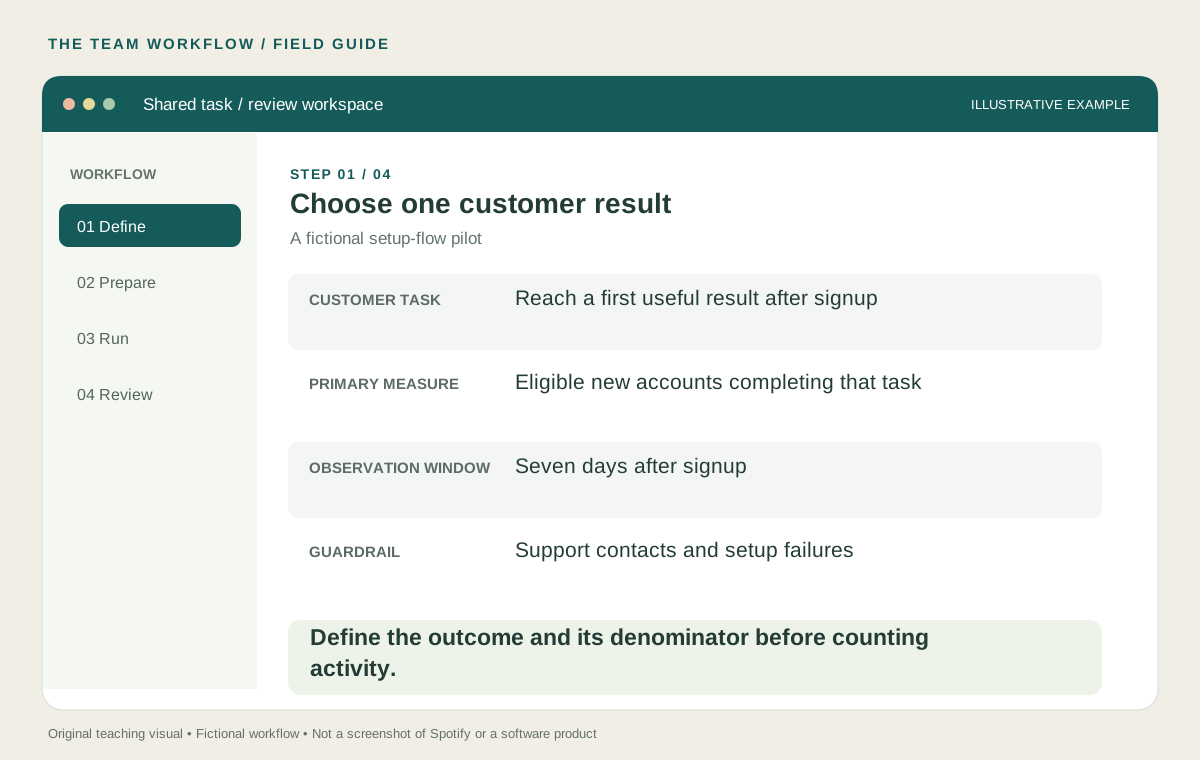
Use one outcome narrow enough to observe. The fictional example in this guide is a software product whose new users struggle to finish setup and perform their first useful task. The team proposes using a coding agent to prepare small improvements to that journey.
Define task completion before the pilot. For instance: an eligible new account completes setup and performs the named first-value action within seven days. Write the numerator, denominator, exclusions and observation window. A percentage without those definitions can move simply because the population changed.
Include a guardrail that detects a plausible downside. A higher setup-completion rate is less attractive if users immediately contact support because the product misunderstood their intent. Track setup errors, relevant support contacts and any reversal of the completed action.
Useful question: if we doubled the number of releases but this customer measure stayed unchanged, what would we conclude? Answering that now helps prevent release activity from becoming the goal later.
2. Measure the work from request to accepted release
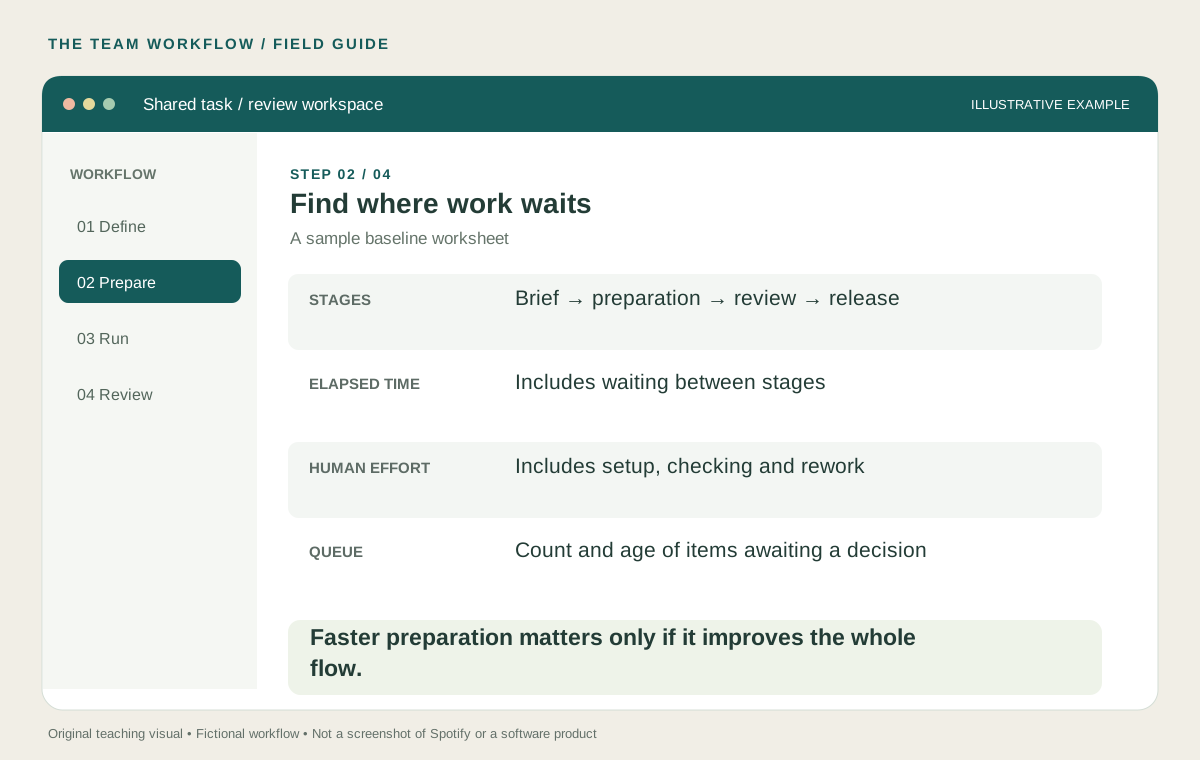
Take a baseline from a recent, comparable class of work. Record when a task was agreed, when preparation began, when it became ready for review and when it was accepted and released. Keep elapsed time separate from human working time. Waiting three days for a decision is not three days of engineering effort, but it still delays value.
Count the effort people often omit: preparing context, explaining the codebase, reviewing the result, correcting errors, checking the preview and handling a failed attempt. Include the person who picks up the task after the original requester moves on.
At the same time, inspect the review queue. How many items are waiting? How old are they? Which lack an owner or a decision? If preparation is already fast and review dominates elapsed time, generating more work may enlarge the queue.
A modest operating rule can help: start another agent task only when a reviewer has capacity for the output. Treat that as a local experiment. The appropriate limit depends on task size and available reviewers, not a universal number.
3. Test one workflow with a comparison you can explain
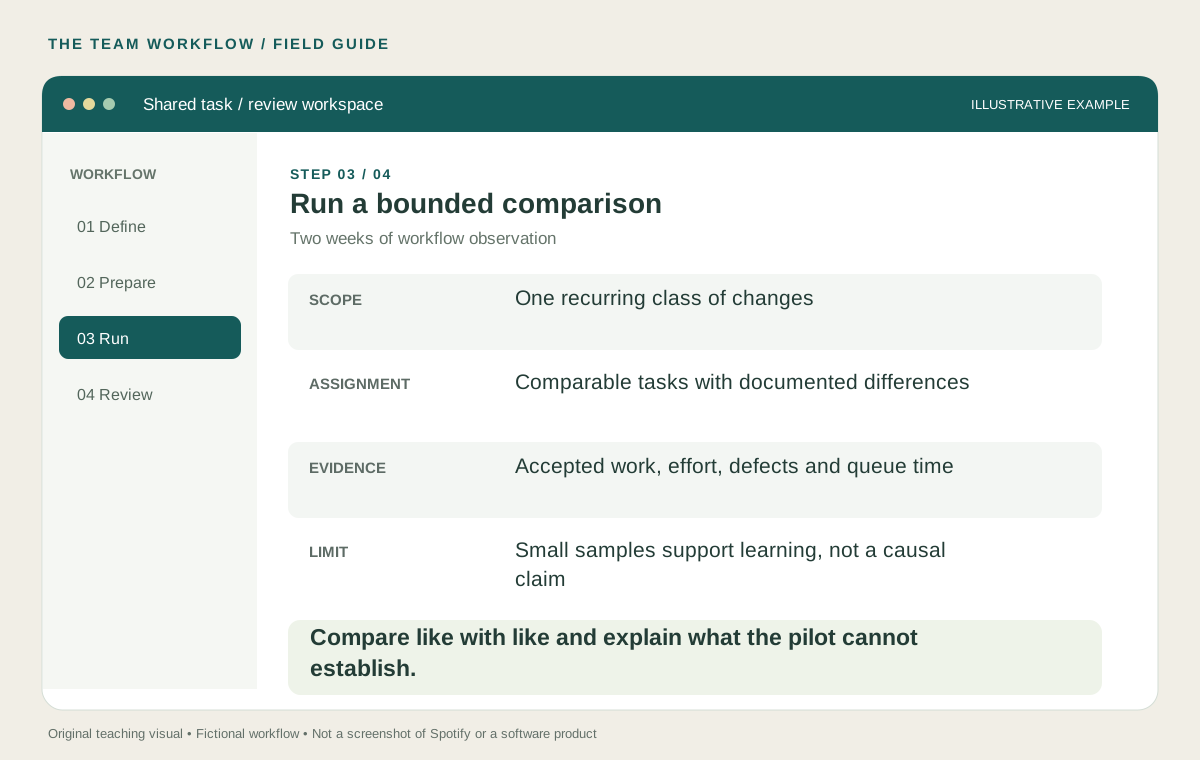
For two weeks, choose one recurring task class, such as small improvements to the setup flow. Use comparable tasks and record differences in complexity. Give both approaches the same acceptance criteria. A comparison between an easy AI-assisted copy change and a difficult manual architecture change teaches very little.
If practical, assign comparable tasks in advance between the existing workflow and the agent-assisted workflow. If random assignment is not feasible, describe the selection method and limitations. Do not call a before-and-after comparison a controlled experiment.
Keep the scope stable enough to learn. Changing the model, instructions, review process and task type at the same time makes it hard to understand what helped. Record important changes to the workflow so the team can distinguish the first setup cost from repeat use.
A two-week workflow pilot may reveal review effort and failure patterns. It may be too small or too short to establish a customer outcome change, especially with low traffic or a seven-day observation window. Continue collecting the customer measure after the last eligible cohort has had time to complete the task.
4. Use total cost, quality and customer progress to decide
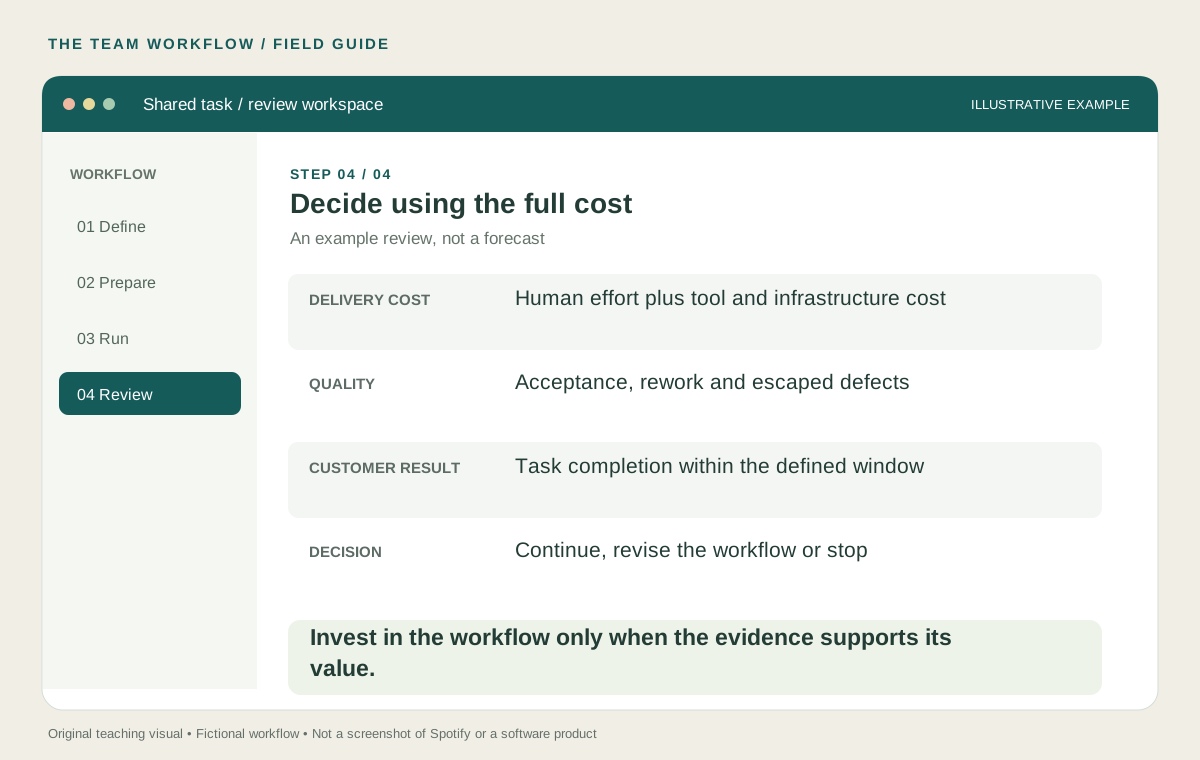
Calculate the cost of an accepted change using human effort plus attributable model and infrastructure costs. Show one-time setup separately from recurring delivery. An agent run that fails still belongs in the total, even if it never produces a pull request.
Then compare quality: how often was work accepted without substantive rework, how much correction did it require, and what defects reached users? Define “substantive” consistently before counting. Otherwise the definition can drift to make the preferred workflow look better.
Finally, inspect the customer outcome. A faster workflow can be operationally useful even before a customer effect is established, but state those as separate findings. “Review effort fell in this small pilot” and “new users completed their first task more often” require different evidence.
A decision rule might be: continue if accepted work requires less total effort, serious defects do not increase and the review queue remains manageable. These are example criteria to adapt, not promised results. If customer value is still uncertain, continue the measurement rather than manufacture a conclusion.
A compact experiment brief
Customer task:
Eligible population and observation window:
Primary outcome, numerator and denominator:
Current workflow and proposed change:
Comparable task class and assignment method:
Human effort, tool cost and waiting time:
Quality guardrails and stop conditions:
Review date, decision owner and remaining uncertainties:
What a useful result might look like
A credible readout can say that the agent prepared changes quickly but reviewers spent longer correcting missing context. That is not a failed exercise. It identifies the next intervention: a better brief, a narrower task or a reusable validation check.
Another readout may show that the workflow saves effort while the customer metric remains unchanged. The next question is whether the team is choosing the right improvements. The constraint has moved from production to prioritization.
Spotify’s story is an invitation to examine the whole delivery system. Count the work, understand its cost and follow it far enough to see whether somebody’s task became easier. That is how faster coding becomes an outcome worth investing in.
Choose your next practical guide
Source & further reading
Spotify Engineering · June 3, 2026 ↗Background references are distinguished from our original examples and proposed exercises.