
Design the journey around a qualified next action
A larger list is not automatically a healthier pipeline. For a service business, the useful question is whether the right person receives help, understands the next step and reaches someone who can respond. Design measurement around that progression before adding traffic.
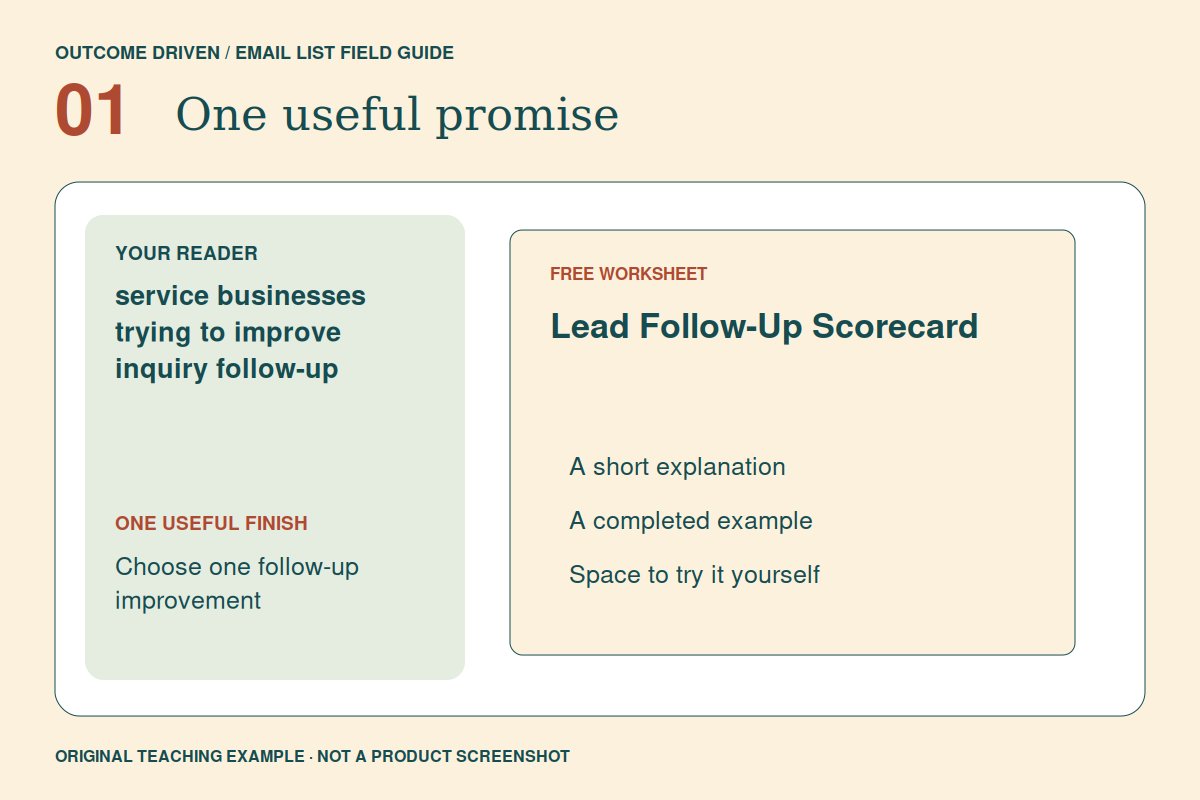
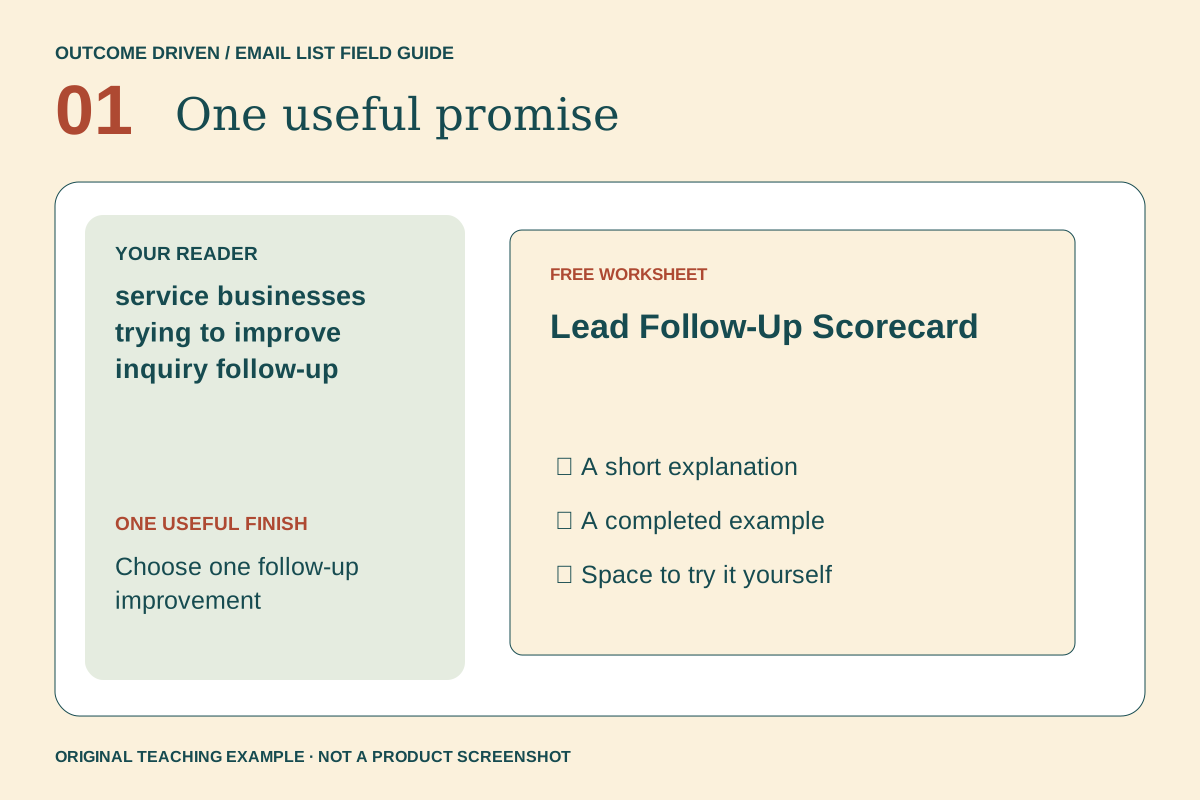
This example uses a Lead Follow-Up Scorecard for small service teams. It helps a reader inspect response ownership, timing and unresolved enquiries. It is an educational diagnostic, not a validated assessment or a prediction of revenue.
Define “qualified” in terms the team can apply consistently: the enquiry concerns a service you offer, the person can describe a relevant need and they agree to the next conversation. A high score alone should not automatically qualify a person or trigger an unwanted sales call.
Step 1. Map the friction your scorecard can reveal
Start with the current journey: an enquiry arrives, someone reviews it, a response is sent and a next step is agreed. Ask where progress commonly becomes unclear. Build questions around observable behavior rather than vague ratings such as “How good is your marketing?”
Useful prompts include “Who owns a new enquiry?”, “How do you know it received a response?” and “Where are unanswered enquiries reviewed?” Give the reader a short explanation of why each question matters. Include an “I don't know” option so the score does not force false certainty.
Provide a practical action for each gap. An unclear owner leads to an ownership checklist; an inconsistent response process leads to a handoff checklist. A diagnostic that merely declares a low score adds anxiety without helping the reader improve.
Step 2. Make the signup promise match the diagnostic
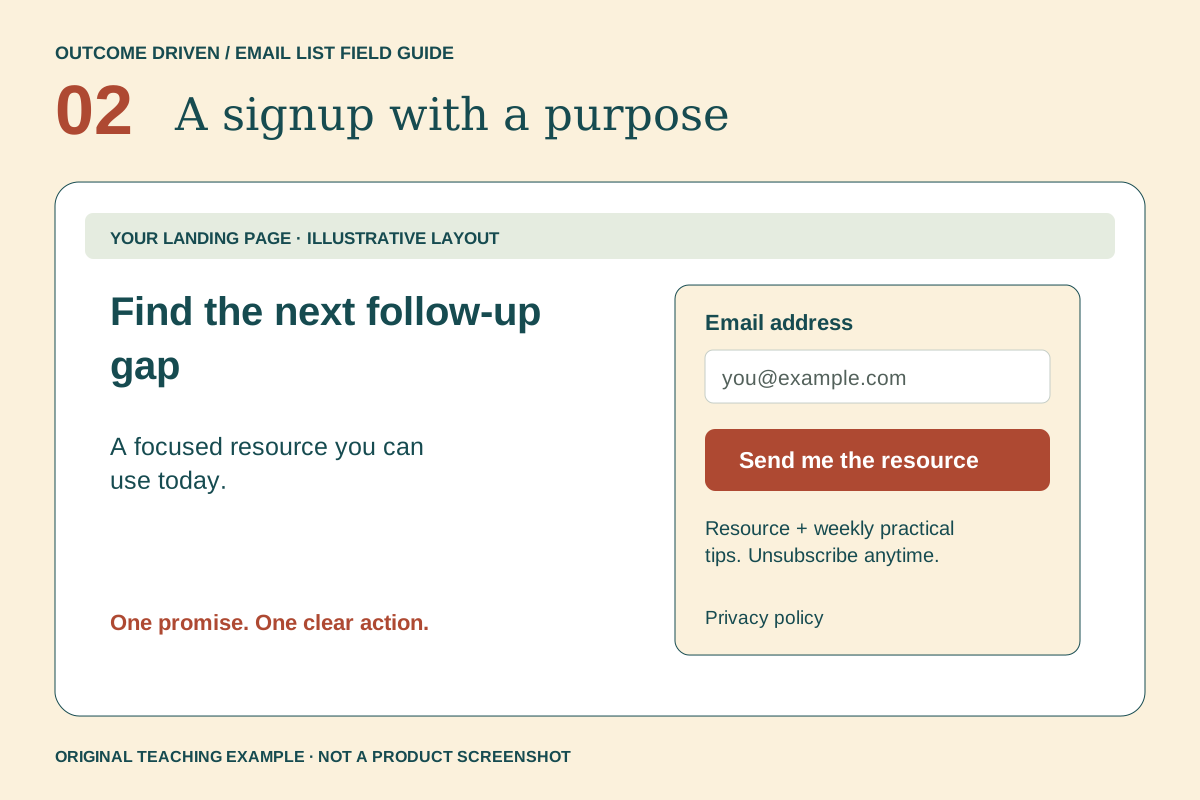
Describe what completing the scorecard will produce: “Identify a follow-up gap and choose one action to improve it.” Show the type of result the reader receives. Avoid promising a particular number of leads, bookings or revenue from completing a form.
Keep service qualification separate from basic resource delivery. Ask for the address needed to send the result and, where useful, an optional question about the main follow-up challenge. Explain subsequent email content and identify the sender before the signup action.
If the next step is a consultation, say whether it is optional and what it covers. Do not make a “get my results” button silently request a sales call. The reader should understand which action they are taking.
Step 3. Define consent, segments and ownership
Map each submitted answer to a documented field or tag. “No clear owner” and “Slow first response” can lead to different educational follow-ups. Keep the original answer available so the team can understand why a message was selected.
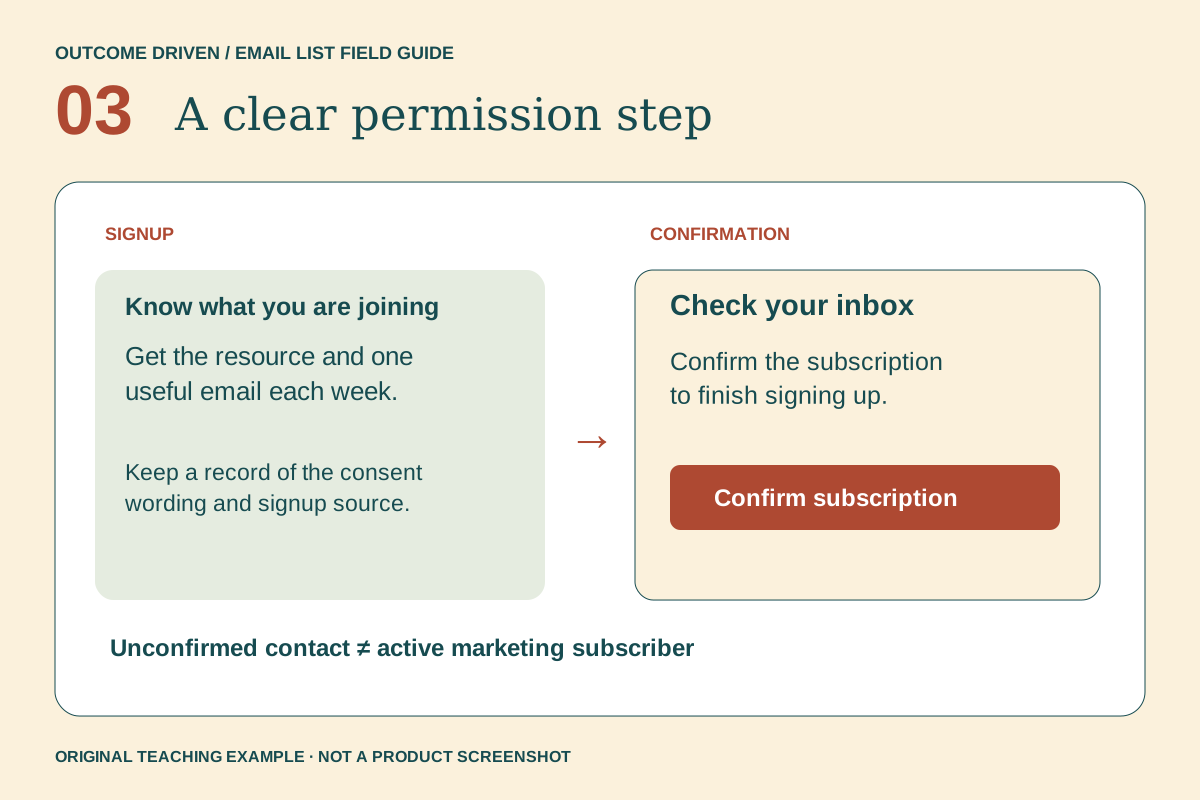
Configure confirmation where appropriate and test the integration's handling of it. Store the signup context and keep unsubscribed contacts out of promotional sequences. If someone explicitly requests a conversation, route that request to the assigned owner with the context the person supplied.
Use only the information necessary for that handoff. Do not ask for confidential customer records or copies of live lead databases in a public scorecard. If a deeper engagement needs sensitive data, establish an appropriate process separately.
Step 4. Deliver a result the reader can act on
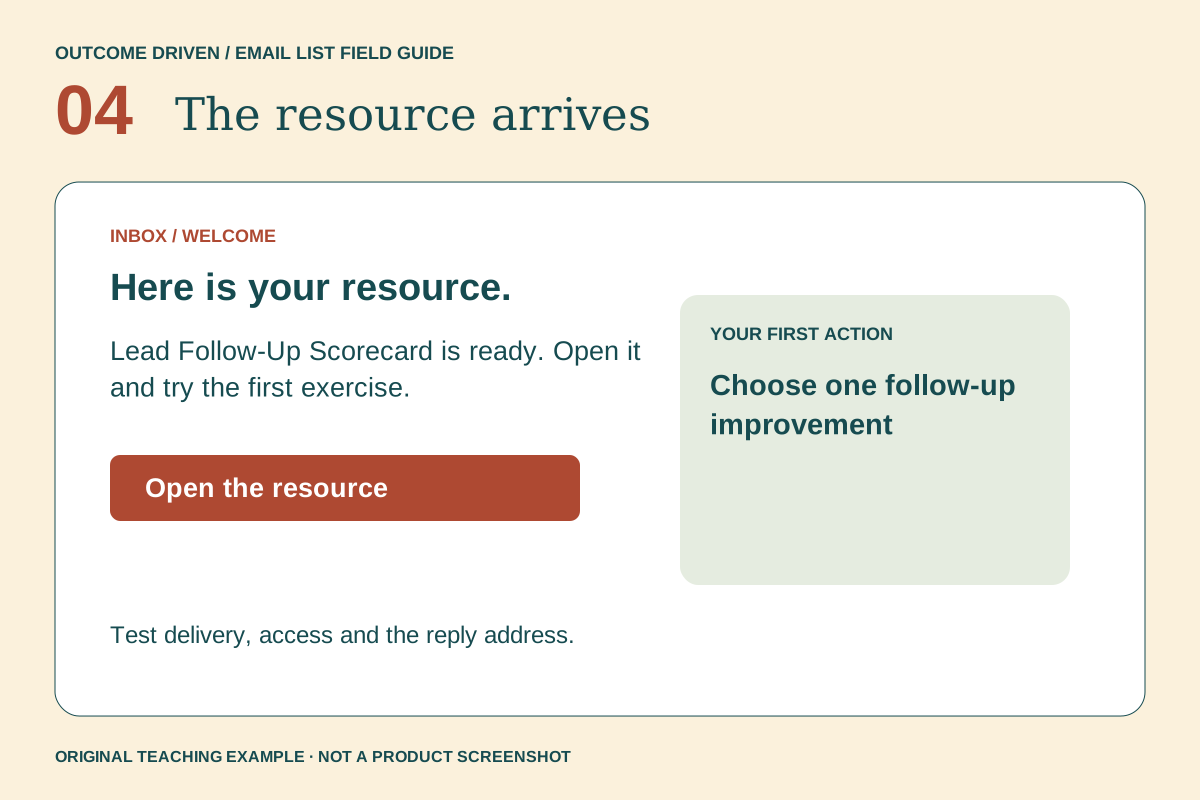
Write the result as an observation and a next action. For example: “You indicated that new enquiries do not have a named owner. Choose a person responsible for reviewing the queue and a backup for absences.” Label this as guidance based on self-reported answers.
Link to the scorecard or result in the delivery email and repeat the most useful action in text. The reader should not need to book a call to understand the basic recommendation. Explain any scoring logic in plain language so the result does not appear more authoritative than it is.
Test every result path with fictional entries. Verify the displayed action, the email content and the receiving team member. A technically successful form can still deliver the wrong recommendation or send a request to an unmonitored inbox.
Step 5. Follow up according to the identified gap
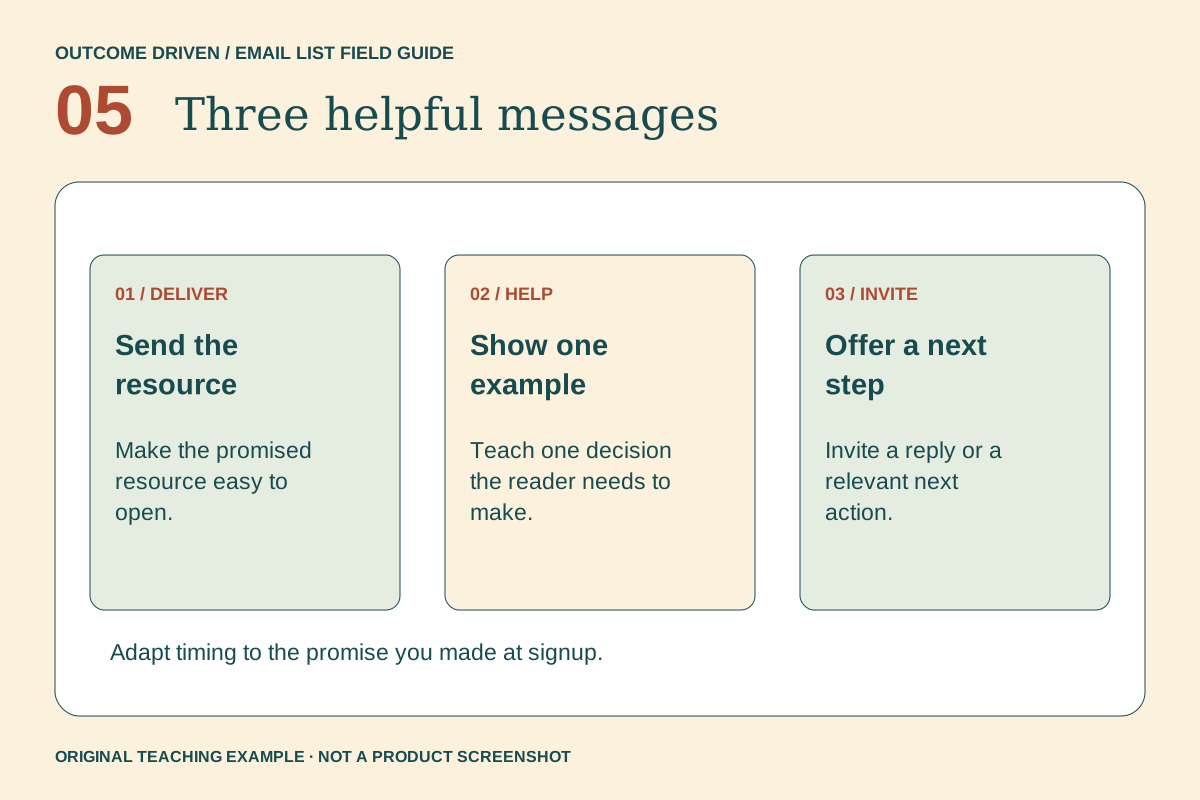
- Result email: restate the reported gap and provide a short action checklist.
- Implementation email: demonstrate one relevant change, such as a visible enquiry owner and backup. Ask whether the action was completed.
- Optional review: invite the reader to discuss unresolved obstacles, explaining the scope of the conversation and any applicable cost before commitment.
Do not send the same ownership lesson to someone whose main issue is inconsistent follow-up timing. A modest amount of relevant branching is enough; every additional branch creates more copy and behavior to maintain.
Assign someone to monitor replies and stop automated reminders when a human conversation makes them inappropriate. Service quality after signup is part of the conversion journey, not an activity outside the funnel.
Step 6. Measure cohorts through to the agreed next step
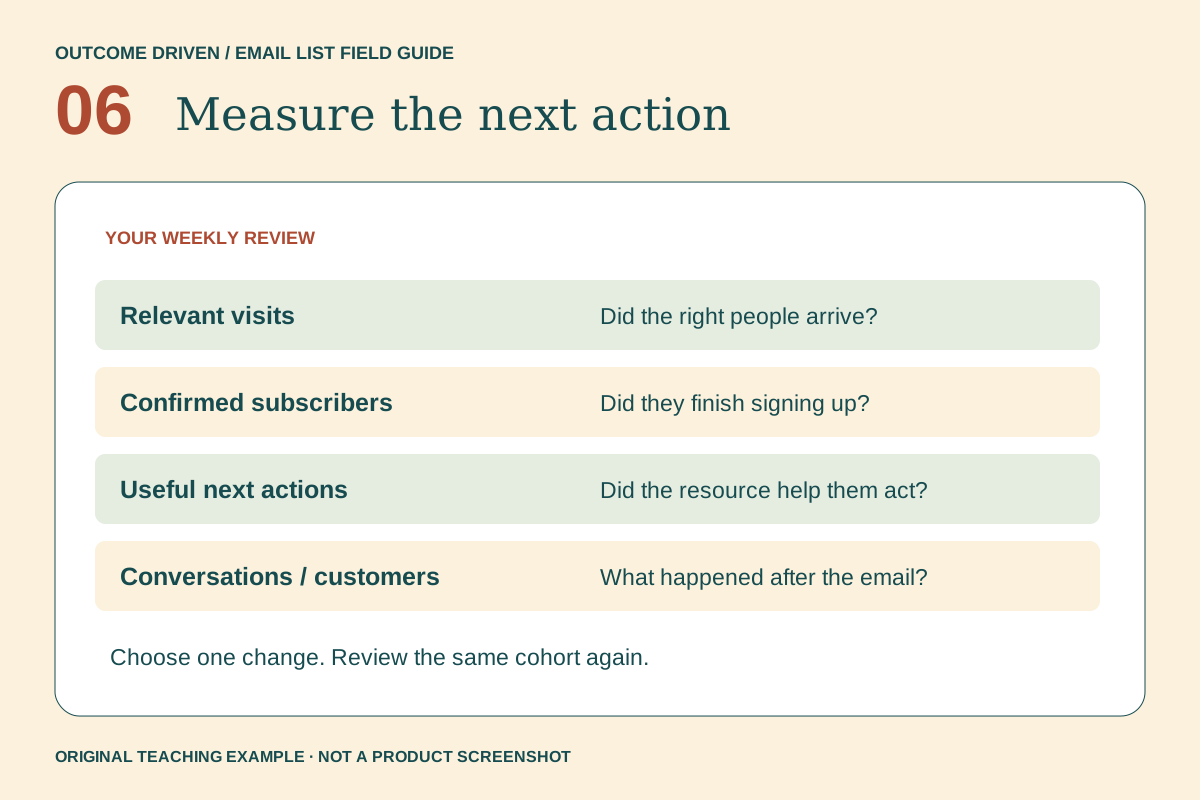
Define events before launch: eligible page visit, confirmed subscription, result delivered, action reported complete, conversation requested and conversation held. Decide who records the last two events. Use a consistent observation window so a new cohort is not compared with one that has had much longer to respond.
Calculate each rate using the population that could take that action. For example, conversation requests divided by confirmed subscribers describes one part of the journey; held conversations divided by requests describes another. Report both counts alongside the rates when samples are small.
- Low confirmation: inspect address errors, confirmation copy and deliverability.
- Delivered results without useful replies: inspect whether the recommendation is specific and actionable.
- Requests without held conversations: inspect ownership, response timing and scheduling friction.
These are diagnostic hypotheses, not conclusions from the rates alone. Review actual examples before choosing a change. Revenue attribution requires its own evidence; a sequence of events does not by itself prove causation.
Plan one controlled improvement
Write an experiment brief with the observed problem, proposed change, expected behavior, primary measure and guardrail. A guardrail might be increased unsubscribes or a workload the team cannot support. Change one meaningful part of the journey and record the date, audience and traffic source.
An AI assistant can help draft result explanations from your approved scoring rules. Require it to use only those rules, preserve “unknown” answers and avoid inventing diagnoses or performance improvements. Review every output branch before publishing.
Make the handoff part of the launch checklist
Before releasing the scorecard, confirm who handles replies, how quickly requests are reviewed, what happens during absences and how opt-outs are honored. Test the public page, mobile result, delivery email and internal notification with non-customer test data.
A branching tool such as involve.me can support a more tailored journey when those branches serve a clear purpose. A simpler form may be enough for one diagnostic and one follow-up path. Choose against the workflow you can maintain.
Use OutcomeDriven's landing-page tools to develop the page around this defined next action. Review the linked email guidance for sender information and opt-out requirements. The final test is whether a suitable reader receives useful help and a clear, voluntary route forward.
The useful next action is the reason to build the list.
Source & further reading
involve.me — interactive email-list funnels (inspiration) ↗MailerLite — confirmation and double opt-in setup ↗FTC — commercial email guidance ↗Background references are distinguished from our original examples and proposed exercises.