EVIDENCE BEFORE EXPANSION / FREE POCKET PRODUCT
Agent Workflow Evidence Kit
Measure accepted outcomes, expose missing data and make a defensible pilot decision.

A small kit.
A useful finished result.
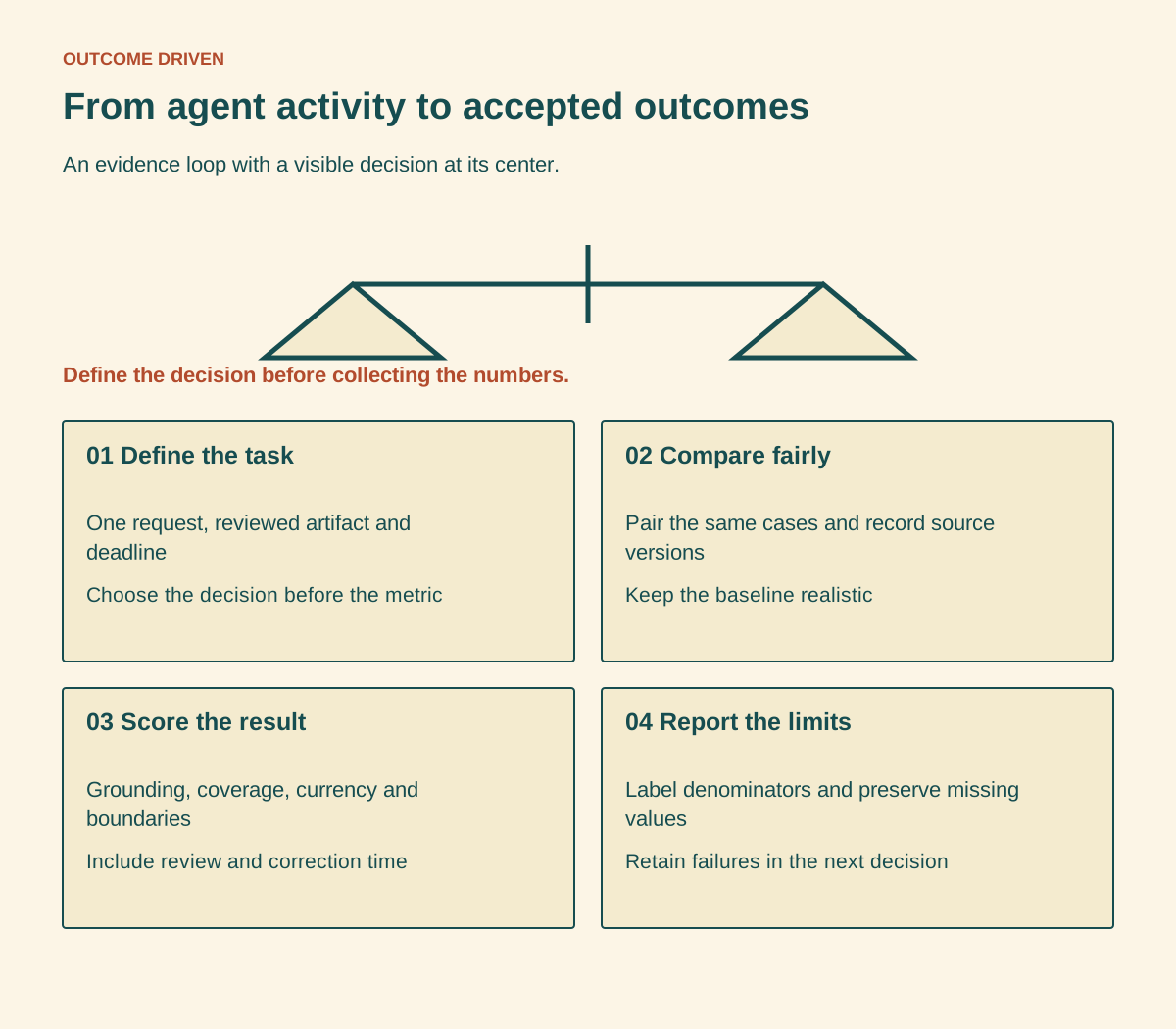
Design a small paired experiment for an MCP or WebMCP workflow. Choose the decision and scoring rule before the run. The included dataset is fictional and intentionally imperfect; it demonstrates how to report a missing duration without manufacturing a time-saving claim.
Agree on the decision
Complete the hypothesis sheet before seeing results. Define a reviewed task, a realistic baseline and a primary acceptance condition.
Prepare paired cases
Use the same underlying tasks for both conditions. Freeze or record source versions, vary execution order and define the deadline.
Capture the full run
Keep requests, tool results, artifacts, corrections and review notes. Record human interventions instead of crediting them to the agent.
Score and calculate
Apply the rubric to every eligible case. Keep missing values null and label the denominator and subset used for each calculation.
Write a bounded conclusion
Use the memo to state what the evidence supports, its limitations and the next experiment. Retain failed runs when making improvements.
YOUR WORKING CANVAS
Make it specific.
Write your own notes, or load the fictional example to see a completed version. Download your work before closing this page.
Your notes stay in this page's memory. Nothing is submitted, saved to an account or sent to an AI service. Closing or reloading the page clears your work.
Your export preview
EDITABLE COMPANIONS
Take the next step.
KEEP THE WHOLE KIT
Work at your pace.
The ZIP includes the PDF guide, the original graphic, this offline worksheet and all editable templates. Open index.html in a browser after extracting it.
Use the materials for your own project or client work. Check and adapt the examples; they are fictional demonstrations.
Download the complete kit